Stop applying with an empty portfolio.Build AI Agents.Build Machine Learning.Build Cyber Security.Build Data Science.Build Full Stack.Build Computer Vision.
A free 4-week remote internship where you ship 2 real projects, get every line reviewed against criteria you can read before you apply, and walk into your next interview with work you can open on screen.
Build with the stack we ship to enterprise clients —agentic AI, LangGraph, RAG, MCPand the tools teams are hiring for right now.
0
Domains
0
Project briefs
0h
Of work specified
0
Weeks, self-paced
VerifiableAX-••••-••••-••••
Certificate of completion
Your name here
Machine Learning Internship
Projects listed on the certificate
Credit Scoring Model
Disease Prediction from Medical Data
A QR anyone can scan to confirm it is genuine — and see what you built.
Reviewed against published criteria
Offer letter on day one
Not sure where to begin?
Tell us what you are trying to do
Four questions, then a specific order to work through — which guide, which project, and only then whether anything is worth buying. Say your budget is zero and you will be shown nothing paid at all.
See how well your resume matches the job you want.
Upload your resume, paste a job description, and get a Job Match Score out of 100 with the skills you are missing, usually in under a minute. Free CareerOS analysis, no sign-up.
Virtual internships have a reputation problem. Here is exactly what we do differently, and you can check every line of it.
How it usually goes
At AgenticX
The fee
The fee
You are pushed toward a paid certificate to have anything to show
Never charged for the work. A certificate is offered at the end and is entirely optional
The tasks
The tasks
Four vague bullet points in a PDF
Full briefs with objectives, datasets and time estimates — public before you apply
Assessment
Assessment
Nobody reads the code
Every submission graded against the criteria published on its brief
Feedback
Feedback
None
Written feedback on every submission, criterion by criterion
Passing
Passing
Automatic on submission
A submission that misses a criterion does not pass. Resubmit as often as you like
The certificate
The certificate
A PDF with your name on it
Unique ID, scannable QR, public verification page, and a page listing what you built
Conditions
Conditions
Mandatory social follows before you can apply
Following us is optional. The one thing required is the cohort group, because that is where you get help
We also do not claim a stipend, guarantee placements, or display accreditation marks we are not entitled to. If that costs us a few applicants, it is worth it — the FAQ answers the awkward questions rather than dodging them.
I built a tool-using research agent that searches for information, fetches sources, and produces answers with traceable citations. The harder part than I expected was making the tool calls, state, source tracking, and failure handling reliable rather than simply getting the agent to generate an answer. The review feedback was useful because it helped me identify my progress in actual task if given.
5 out of 5
Learning something new by actually building them was really exciting. When I built the reasearch agent I figured out how exactly api keys , groq, tavily , knowledge bases , search engines , langgraph actually works how they function. Thankful for the agenticx for providing such platform where in u can learn and grow by actually building them.
4 out of 5
The AgenticX internship gave me practical experience through multiple projects, including data cleaning, core programming concepts, and a task management application. Some parts were challenging, especially setting up projects and working through GitHub and deployment-related steps, but they helped me understand the development process better. The review and evaluation process was useful for identifying areas that needed improvement, although more detailed feedback on some submissions would have made the learning experience even better.
5 out of 5
My Generative AI & LLM Engineering Internship was a valuable hands-on learning experience. Through the internship projects, I gained practical exposure to RAG, document question answering, source citations, retrieval evaluation, LLM-based generation, and performance measurement. Building and evaluating these projects helped me understand how GenAI applications work beyond basic model usage. I also improved my practical skills in Python, LangChain, FAISS, embeddings, Ollama, Streamlit, evaluation metrics, and GitHub. Overall, the internship gave me a better understanding of building, evaluating, and presenting real-world Generative AI applications.
5 out of 5
I built a Tool-Using Research Agent that combines web search and page extraction to generate research-based answers with source traceability. The most challenging part was integrating the tools and handling API/model issues while keeping the agent within the required step limit. The review feedback was useful because it helped me understand how to improve the project’s reliability and overall implementation.
5 out of 5
I built two projects during the internship: a credit scoring model using machine learning and a CNN-based handwritten digit recognition system. The most challenging part was making the projects complete and explainable rather than just getting the models to run. The review process was useful because it encouraged me to think about my implementation and decisions more clearly; clearer task-specific evaluation criteria would make the experience even better.
4 out of 5
When i was working on my project DocumentQA the difficult part for me was API part i was using claude and its subscription was expensive aa compared to other Ai so i use gemini API and change the libraries and API keys from code again
5 out of 5
I Gained practical experience in AI, RAG, LLM integration, Python, and Streamlit. Faced dependency, integration, and debugging issues while developing the project These challenges improved my troubleshooting skills.
4 out of 5
I built a small AI-based project during the programme and learned a lot through the process. The challenging part was understanding and implementing the concepts correctly, but the review feedback helped me improve my work. Overall, it was a useful learning experience.
5 out of 5
From CRUD Basics to a Real Deployed Application 🚀
I built and deployed a full-stack CRUD Task Management application. I learned how the frontend, backend, APIs, database, validation, and deployment work together in a real project. The database integration and deployment were harder than I expected, especially making sure data persisted and everything worked correctly after deployment. I wouldn’t tell beginners to skip it, but it may be challenging for someone looking only for a simple frontend task.
I built a RAG Evaluation Suite and a Document Intelligence RAG application, focusing on retrieval quality, answer grounding, and working with real documents. The hardest part was making the system reliable beyond a basic working pipeline, especially ensuring that the retrieved evidence actually supported the generated answers. The review feedback was useful because it helped me identify areas for improvement and approach RAG evaluation more critically.
5 out of 5
My experience with the Python Development Internship at AgenticX AI Labs was good. I learned practical Python skills by working on projects, and the review feedback helped me improve my understanding and coding.
5 out of 5
I learned how to build and structure AI-agent projects through the project briefs, especially around LLMs, RAG, tool use, and agent workflows. The hands-on projects were useful for understanding how these concepts work beyond simple demos. The main challenge was connecting multiple components into a complete working system and debugging the workflow. I would recommend it to students who want practical exposure to AI agents and related technologies.
4 out of 5
I built a Python command-line tool with proper error handling for cases like division by zero and user interruption. The hardest part was understanding how command-line arguments and exit codes work, but completing the project helped me understand them better. The review process was useful because it confirmed that my project met the requirements and gave me confidence to continue with the next task.
3 out of 5
Tool-Using Research Agent
I built a Tool-Using Research Agent using Python, LangGraph, Gemini, and Tavily. I learned how an AI agent can use external tools such as web search and webpage fetching to answer research questions and provide source citations. The most challenging part was making sure the agent handled tool failures, empty results, and step limits without getting stuck in an infinite loop. I also learned that generating an answer is not enough; the information should be traceable to the sources used by the agent. I would recommend this task to students and beginners who want practical experience with AI agents and tool calling. I would skip it only if someone is looking for a very simple project, because understanding the workflow, tool selection, error handling, and source traceability takes some effort.
5 out of 5
“The AgenticX AI Labs virtual internship gave me a great opportunity to build a practical AI project and understand how AI agents and automation work in a real project environment. The implementation and debugging were more challenging than I initially expected, but that helped me learn how to troubleshoot and improve my workflow. The review process was useful and encouraging, and overall, the four-week experience was very valuable for my learning.”
5 out of 5
I used the retrieval chapter to rebuild our support search using Claude, AWS, and Hugging Face.The evaluation section was the most useful part—I finally had a concrete metric to show my manager instead of just a demo. However, the deployment chapter assumes a standard AWS setup, which wasn't fully applicable to my specific tech stack.
5 out of 5
I built two projects during the internship: a credit scoring model using machine learning and a CNN-based handwritten digit recognition system. The most challenging part was making the projects complete and explainable rather than just getting the models to run. The review process was useful because it encouraged me to think about my implementation and decisions more clearly; clearer task-specific evaluation criteria would make the experience even better.
Every review here was submitted by someone whose email we matched to a purchase, a certificate or a reviewed project. We publish criticism as readily as praise; we do not write reviews ourselves, and we do not remove one for being unflattering.
Three things for the part that comes after: what to build, how to prompt it properly, and how to talk about it in an interview. Every one of them has a substantial piece you can read in full before paying — same depth as the rest, nothing held back.
AI Project Vault
₹499
12 AI projects specified to build from — architecture, the build in order, how to tell whether it works, and what breaks on real input.
28 in-depth articles on the problems we actually hit building agents, RAG pipelines and MCP integrations in production. Free, no sign-up, no email wall.
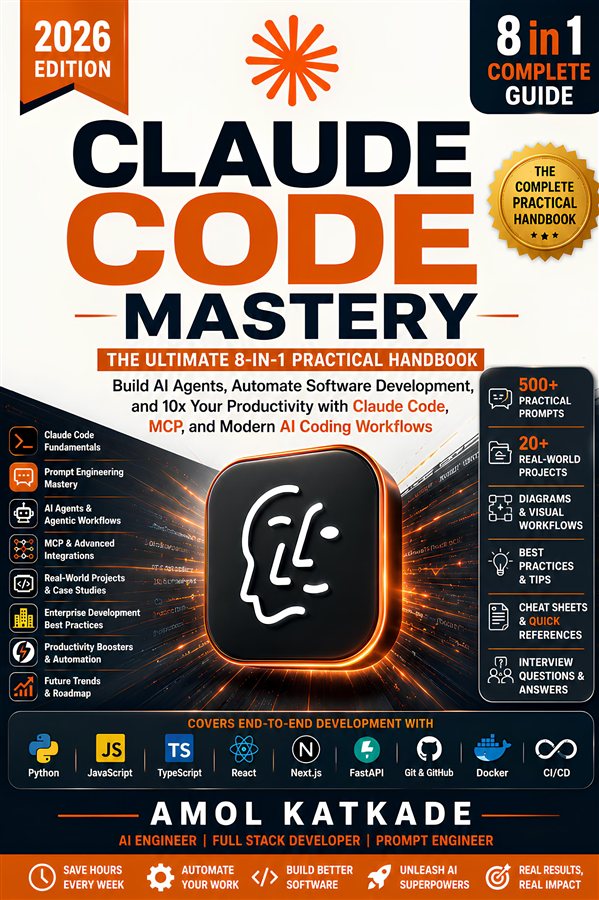
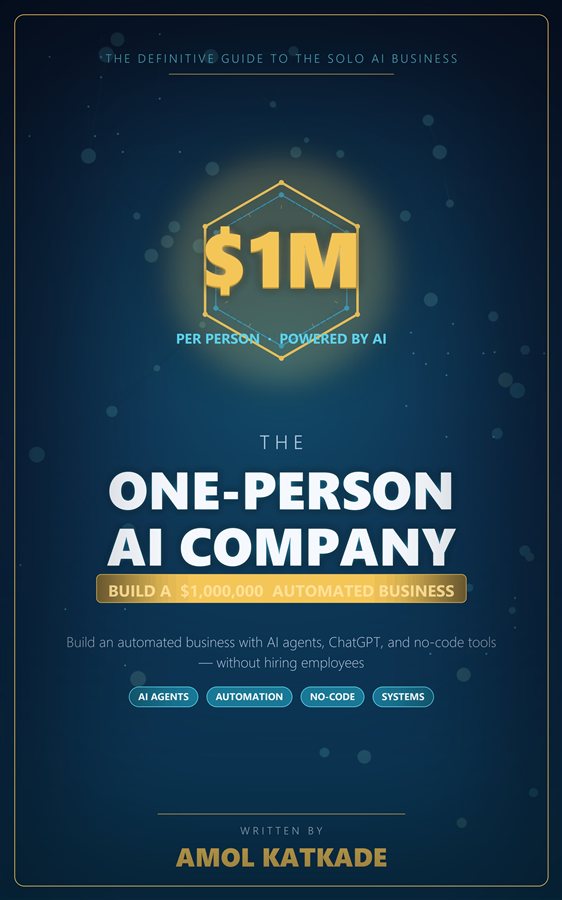
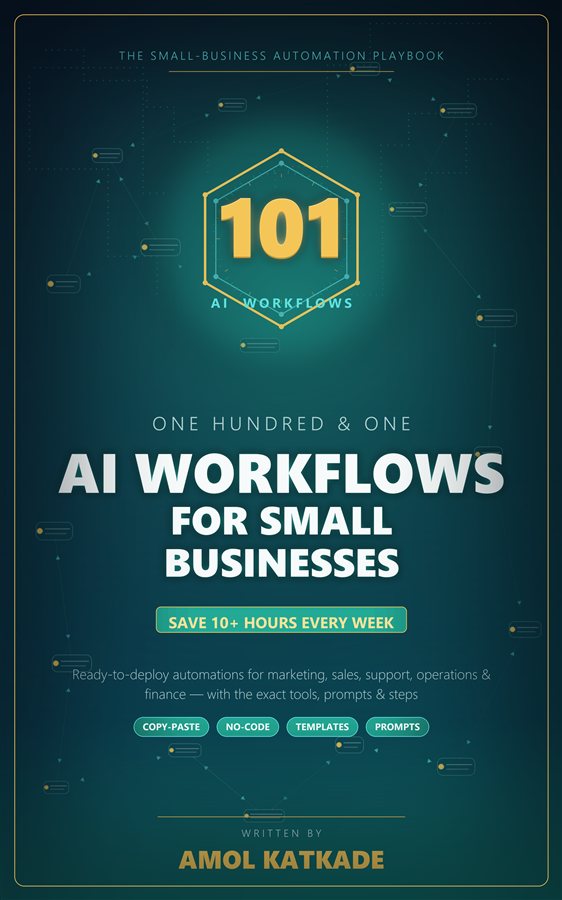
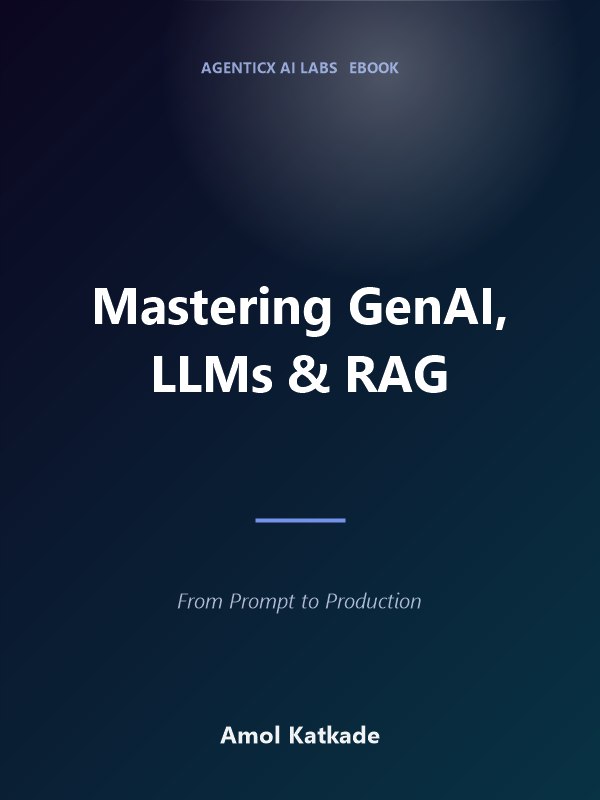
Practical, hands-on guides on Claude Code, agents, RAG, LangGraph & building an AI business — from ₹149. Hover to pause, click any cover to look inside.